Do you actually need a base?
Yes, you always need a solid base for your shed to sit on. It can come in a few different forms, but the key thing is the same every time:
- It needs to be solid and strong
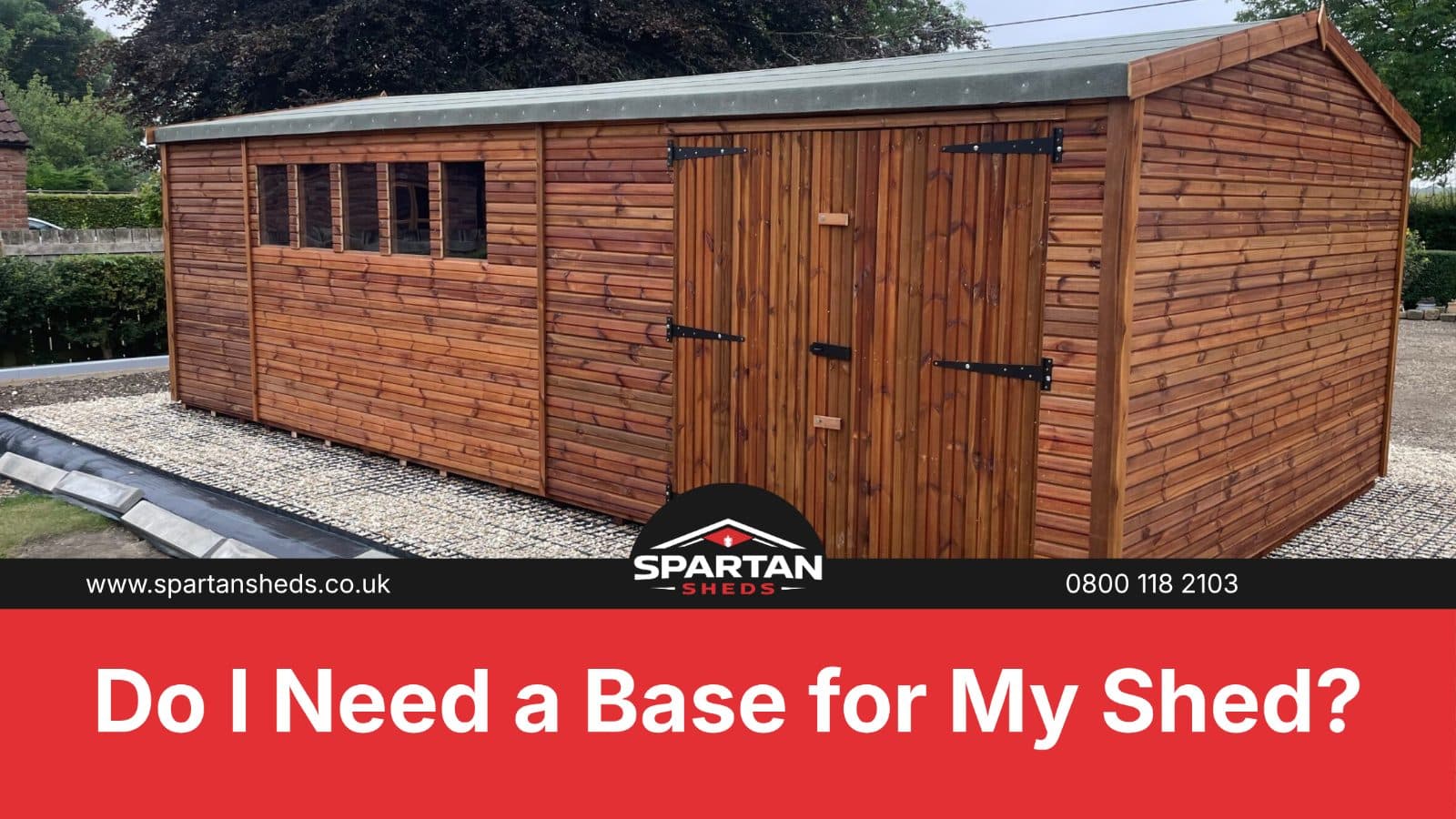
- Common choices are concrete, slabs, timber frame, decking, or gravel
- Putting a shed straight on grass is a big no no
The main base options
Slabs
A good option if a full concrete base is a bit too expensive. Slabs are usually cheaper and do an amazing job at first. But after putting up thousands of sheds and taking down plenty of old ones, we've seen that over a long period of time:
- Slabs can sink and crack
- This leaves your shed sitting unevenly and shortens its lifespan
- The worst part is you usually only find out when the shed needs replacing
It's still a great option overall and beats bases like gravel and stone, but it does come with some downsides.
Concrete base
Probably the most popular base we see when people get a new shed, and for good reason. Concrete is solid, long lasting, and won't sink, dip, or crack, meaning you get the most out of your shed. There are a couple of downsides though:
- Hard to remove - if you ever want to move your shed, a big slab of concrete is very hard to remove yourself, you'll usually need to hire someone to break it up
- Price - it's one of the more expensive base options because of the time and materials that go into it
So if you go for concrete, be ready for it to be there as long as you are. But from what we've seen, that extra bit of investment pays off in how long the shed lasts.
Timber Frame
A timber frame base is basically a frame of pressure treated timber laid flat on the ground, sometimes on top of paving slabs or gravel to stop it sitting straight on soil. It's a good middle ground option:
- Quicker and cheaper to put down than concrete
- Sturdier and more level than gravel on its own
- Needs to be properly treated and kept off wet ground, otherwise you're just building a bit of rot into the base from day one
Done right, it's a solid choice, especially for smaller or lighter sheds where you don't need the extra strength a full concrete base gives you.
Decking
If you're putting your shed on an existing deck, or building a deck at the same time, this can work well as long as the deck itself is solid and level. The thing people forget is that a deck built for people to walk on isn't always built to take the weight of a shed sat on it permanently, especially a bigger one with heavy timber walls.
If you're going down this route, get the deck's frame and joists checked or built with the shed's weight in mind, not just as an afterthought. Get that right and it's a great looking, solid base. Get it wrong and you'll see the same sinking and unevenness problems as a bad slab or gravel base, just hidden under decking boards.
Gravel
Gravel is the cheapest option and it's easy to see why people go for it:
- No digging up concrete
- No waiting for anything to cure
- Just level it off and you're ready
The problem is gravel on its own moves. It shifts under weight over time, especially with rain washing fines out from underneath, and that movement is exactly what causes a shed to sit unevenly a few years down the line. We'll always put a shed on gravel if that's what someone wants, but we'd never actively recommend it as the only thing under a shed. If you like the drainage gravel gives you, pairing it with a proper sub base or timber frame on top makes a much bigger difference than people expect.
What happens if you get it wrong
Choosing the wrong base can halve the lifespan of even the best sheds and cause all sorts of headaches along the way.
Thinking about a new shed?
Design yours online, free delivery and fitting included.
Get a price in 2 minutes →The biggest problem we see is a base that's uneven, slanting, or dipping in certain spots. This can:
- Cause the door to drop, so your lock no longer lines up
- Put extra strain on the hinges
- Even stop you from shutting the door properly
If there are dips in the base, water can pool underneath, which rots the floor from below and means you'll need to replace your shed sooner than expected. Lucky for you, all our sheds come with a free pressure treated heavy duty floor with a 10 year anti rot guarantee, so this is one risk we've already built a fix into.
If you decide to skip a base altogether and put your shed on grass, the biggest issue is the shed sinking into the ground once it rains and the ground turns to mud. An uneven, sinking base doesn't just tilt the floor, it pulls the whole frame out of shape with it. That's what causes twisting: the walls and roof are built to sit square on a flat, solid surface, so once one corner sinks lower than the others, the frame gets pulled slightly out of line. Doors and windows stop closing properly, gaps open up in the joints, and water gets into places it was never designed to reach, which speeds up rot everywhere.
What we recommend and why
If you're asking us straight up, our default answer is concrete. We've built and taken down enough sheds over the years to see which bases hold up and which ones don't, and concrete is the one that just keeps doing its job with no surprises 10 years later. It costs more up front, but you're paying for the years you don't spend dealing with a dropped door or a rotting floor.
That said, we don't push concrete on everyone:
- Smaller or lighter shed, or budget genuinely tight → a well laid slab base or a timber frame base done properly will still serve you well
- Where we'd steer you away is gravel on its own, or nothing at all
Those are the two options where we've seen the most problems come back to us months or years later, and by that point it's usually a much bigger job to fix than it would have been to do properly the first time.
Prepping the base yourself vs getting it done
- Gravel and paving slabs - both doable over a weekend if you're reasonably handy, don't mind a bit of digging, and take the time to get it level properly rather than rushing it
- Timber frame - a step up in terms of skill needed but still within reach for a lot of people
- Concrete - get it done professionally unless you've poured concrete before, it's not just about mixing it, it's getting the depth, the levelling, and the curing time right, and a mistake here is a lot more expensive to fix than a mistake with slabs or gravel
Most people who go for concrete get a local groundworker in to do it, and it's usually worth it just for the peace of mind that it's done right the first time.
Whatever route you go, the one thing we'd say is don't rush it to hit a delivery date. It's much better to push your shed delivery back a week than to install on a base that isn't ready.
FAQ
Can I put a shed straight on grass?
No. Grass isn't a stable base, it moves and sinks over time, especially once it rains and the ground underneath turns to mud. Always put something solid down first, even if it's just gravel or slabs.
How long does a concrete base need to cure before delivery?
We'd normally say give it at least a week before your shed goes on it, longer in colder or wetter weather. If you're not sure, just ask us and we'll factor it into your delivery date rather than risk installing on a base that isn't ready.
What if my garden isn't level?
That's fine, most gardens aren't perfectly level. Whoever preps your base should build in the levelling as part of the job, whether that's extra concrete on one side or packing under slabs. The base is what makes the ground level, not the other way round, so don't worry if your garden has a slope.
Can I move my shed to a different base later?
Depends on the base. Moving a shed off gravel, slabs, or a timber frame is straightforward. Moving it off concrete is a much bigger job, since the slab itself is very hard to remove. If there's any chance you'll move house or want to relocate the shed, that's worth thinking about before you choose concrete.
Thinking about a new shed?
Design yours online, free delivery and fitting included.
Get a price in 2 minutes →